Want this set up for your business?
Hermes agent vs OpenCode is not a normal software comparison. One tool is built around a persistent autonomous agent that can learn from repeated work. The other is a focused coding agent for terminal, desktop, and IDE workflows. If you are choosing for a business team, the real question is not which one is more impressive. It is where the work actually happens.
Hermes Agent fits teams that want a long-running assistant with memory, messaging access, and reusable skills. OpenCode fits teams that want help inside a codebase without turning every operational workflow into an agent project. Both can be useful. But they solve different problems, and confusing those problems is how a promising setup becomes another half-configured tool nobody trusts.
This guide breaks down the choice through setup, daily workflow, risk, and the point where OpenClaw becomes the better operating layer around either tool.
Hermes agent vs OpenCode: the short version
Hermes Agent is for ongoing work. Its documentation describes it as a self-improving agent with a built-in learning loop, skill creation, memory, and support for channels like Telegram, Discord, Slack, WhatsApp, Teams, and more. That makes it interesting for teams that want an assistant to keep context across days instead of answering one prompt at a time.
OpenCode is narrower by design. The official OpenCode site describes it as an open source agent that helps you write code in your terminal, IDE, or desktop. It supports LSP-aware coding, multiple parallel sessions, shareable sessions, and login paths through services like GitHub Copilot or ChatGPT Plus and Pro. That is a different job. It is closer to a coding workbench than a business operations agent.
So the first filter is simple. If your main pain is engineering throughput, code review, refactoring, or feature work, start with OpenCode. If your main pain is repeatable business work across tools, memory, messages, scheduling, and handoffs, Hermes is closer to the category you are looking at.
Need the agent stack mapped before you install?
We can help decide what belongs in Hermes, OpenCode, OpenClaw, or a normal automation tool.
Where Hermes Agent is stronger
Hermes is strongest when the work repeats and context matters. Think weekly reporting, task routing, inbox triage, CRM follow-up drafts, internal research notes, or a support workflow where the agent needs to remember how your business handles edge cases.
The built-in learning loop is the important piece. Hermes is designed to turn useful behavior into skills over time. That does not mean it becomes magically correct. It means the setup has a natural place to preserve working patterns instead of hiding them in a chat transcript. For a founder or operations lead, that matters.
There is a tradeoff. A tool that remembers and acts across channels needs tighter boundaries. You need clear tool permissions, read-only defaults, good logs, and a boring rollback plan. If Hermes can message people or change data, it needs the same access discipline you would use for a junior employee.
If this is the path you are exploring, read our Hermes Agent setup guide before connecting anything sensitive. The install is only the beginning. The real work is deciding what the agent is allowed to know, touch, and send.
Where OpenCode is stronger
OpenCode is strongest when the workflow starts and ends in a codebase. It gives developers a direct agent interface for asking questions, making changes, adding features, and working through sessions without leaving the engineering environment.
That focus is its advantage. A coding agent does not need to manage your sales inbox or remember a client onboarding process. It needs to understand files, language servers, diffs, prompts, tests, and project state. OpenCode is built for that lane.
For business teams, the best use is usually constrained. Let OpenCode help with internal tools, scripts, bug fixes, documentation updates, and engineering backlog cleanup. Do not ask it to become your company operating system. That is where the setup gets weird.
And there is a subtle risk here: because OpenCode feels productive quickly, teams may give it broad repository access before they have branch rules, test gates, and review habits in place. The tool is not the problem. The missing workflow is.
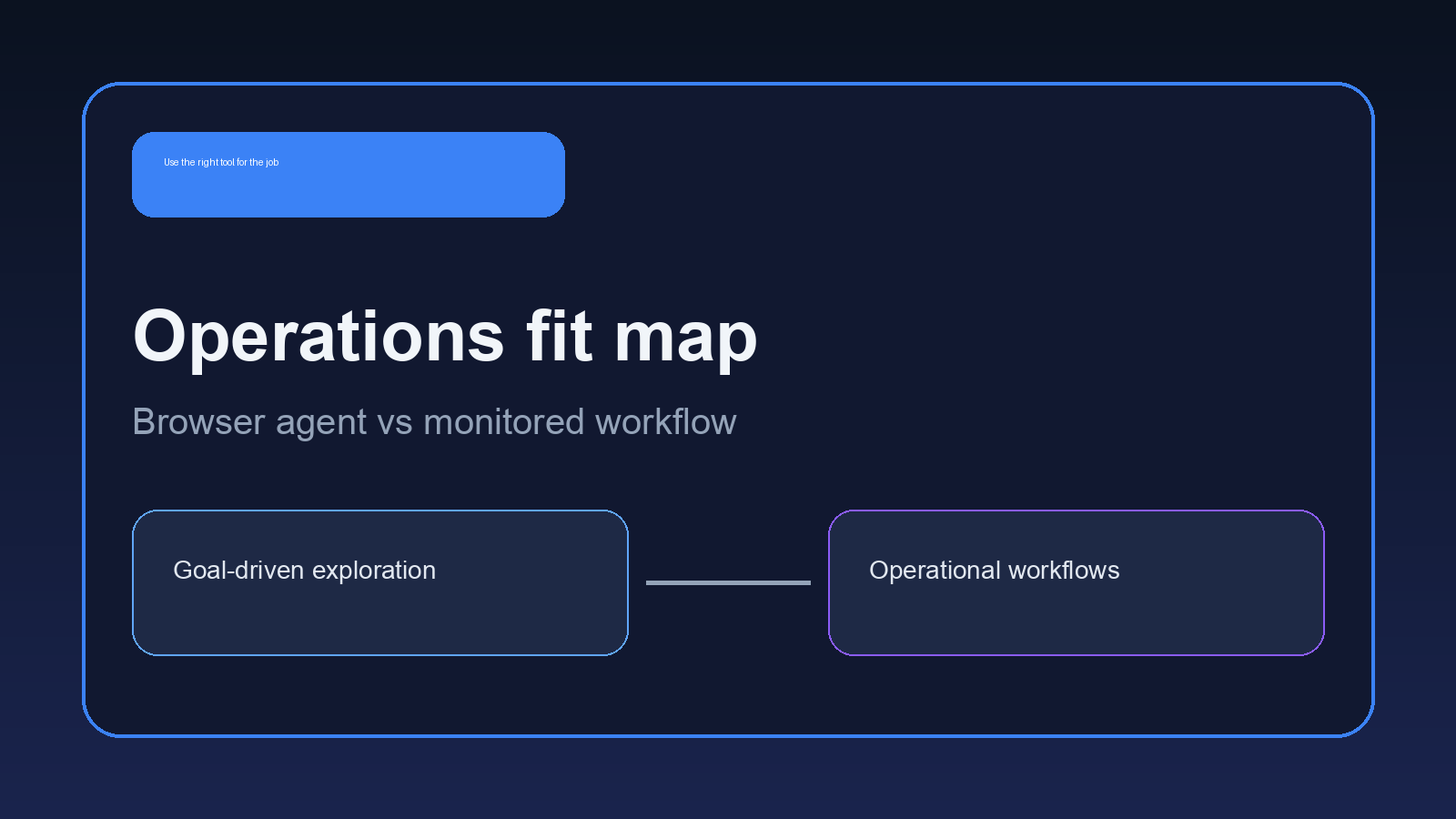
Hermes agent vs OpenCode for setup complexity
OpenCode is usually easier to reason about because the boundary is obvious: it works where code work happens. You still need model access, repository permissions, local setup, and development rules, but the scope is contained.
Hermes asks for a broader setup decision. Where does it run? Which channels can reach it? Which tools are enabled? What does it remember? Who can trigger it? What should it refuse to do? None of those questions are exotic, but they are easy to skip when the demo looks exciting.
My honest take: Hermes is more interesting for operations, but OpenCode is easier to deploy without creating organizational confusion. That does not make one better. It means Hermes needs a setup plan, while OpenCode can often start as a developer tool with a narrower blast radius.
If your team is already comparing agent systems, our Hermes Agent vs OpenClaw comparison explains where a persistent agent ends and an operating layer begins.
How OpenClaw changes the comparison
OpenClaw sits in a different role. It is the layer you use when the work touches people, files, memory, scheduled jobs, approvals, and multiple tools. In that context, Hermes or OpenCode can be part of the stack, but neither should automatically own the whole workflow.
For example, a practical setup might use OpenCode for repository changes, Hermes for a repeated internal research workflow, and OpenClaw for channel routing, cron jobs, memory files, human approval gates, and handoffs. That sounds more complex on paper. In practice, it is cleaner because each tool has a job.
The worst setup is the one where every agent can do everything. Nobody knows which system owns the task. Nobody knows where the final state lives. And when something goes wrong, the logs are spread across three interfaces.
Want a cleaner agent architecture?
We can help separate coding tasks, operations tasks, memory, approvals, and automations before they collide.
Hermes agent vs OpenCode: decision framework
Choose Hermes if the work needs memory, recurring behavior, messaging channels, and gradual improvement. A good Hermes workflow has a narrow mission, a stable source of truth, and a way to review what the agent learned.
Choose OpenCode if the work is mostly software development. A good OpenCode workflow has protected branches, test commands, clear coding standards, and a human review step before anything important ships.
Choose OpenClaw as the control layer when your workflow crosses departments or tools. That includes CRM updates, support routing, Slack or Discord operations, scheduled reports, client-facing drafts, and anything with approval rules. Our OpenClaw GitHub integration guide is a good example of keeping engineering activity connected to the rest of the business without letting a coding tool run the whole company.
There is also a fourth option: wait. If nobody can name the exact workflow, the owner, the approval point, and the failure mode, the team is not ready to install another agent. Write the process down first. The agent should automate a known path, not invent one under pressure.
Recommended setup path
Start with one workflow. For OpenCode, that might be “summarize pull requests and suggest tests before review.” For Hermes, it might be “turn support messages into categorized drafts for approval.” For OpenClaw, it might be “route incoming requests, create tasks, and post a daily operations brief.”
Then define the boundaries. What can the agent read? What can it write? Which actions require approval? Where are logs stored? What happens if the model is wrong, the API fails, or the human reviewer is offline?
For a small team, the first useful document is usually one page: owner, trigger, tools, allowed actions, approval rule, and stop condition. Keep it plain. Add the exact person who can shut the workflow off. If the agent cannot be explained in that format, the setup is probably too broad for the first rollout.
Run the first version manually for a week before giving it more autonomy. This is boring advice. It is also the difference between a useful agent and a very fast source of cleanup work.
Final answer
For most business teams, Hermes Agent is the better comparison if the goal is persistent operational help. OpenCode is the better choice if the goal is developer productivity inside a codebase. OpenClaw becomes the better layer when the workflow needs routing, memory, approvals, scheduled automation, and business context around the tools.
Do not choose based on which demo feels more powerful. Choose based on ownership. If the workflow belongs to engineering, OpenCode is probably the first install. If it belongs to operations, Hermes is worth testing. If it crosses tools and people, design the OpenClaw layer first.
Get the setup right before you scale agents
We can help turn the comparison into a real setup plan with permissions, memory, approvals, and handoffs.