Key Takeaways
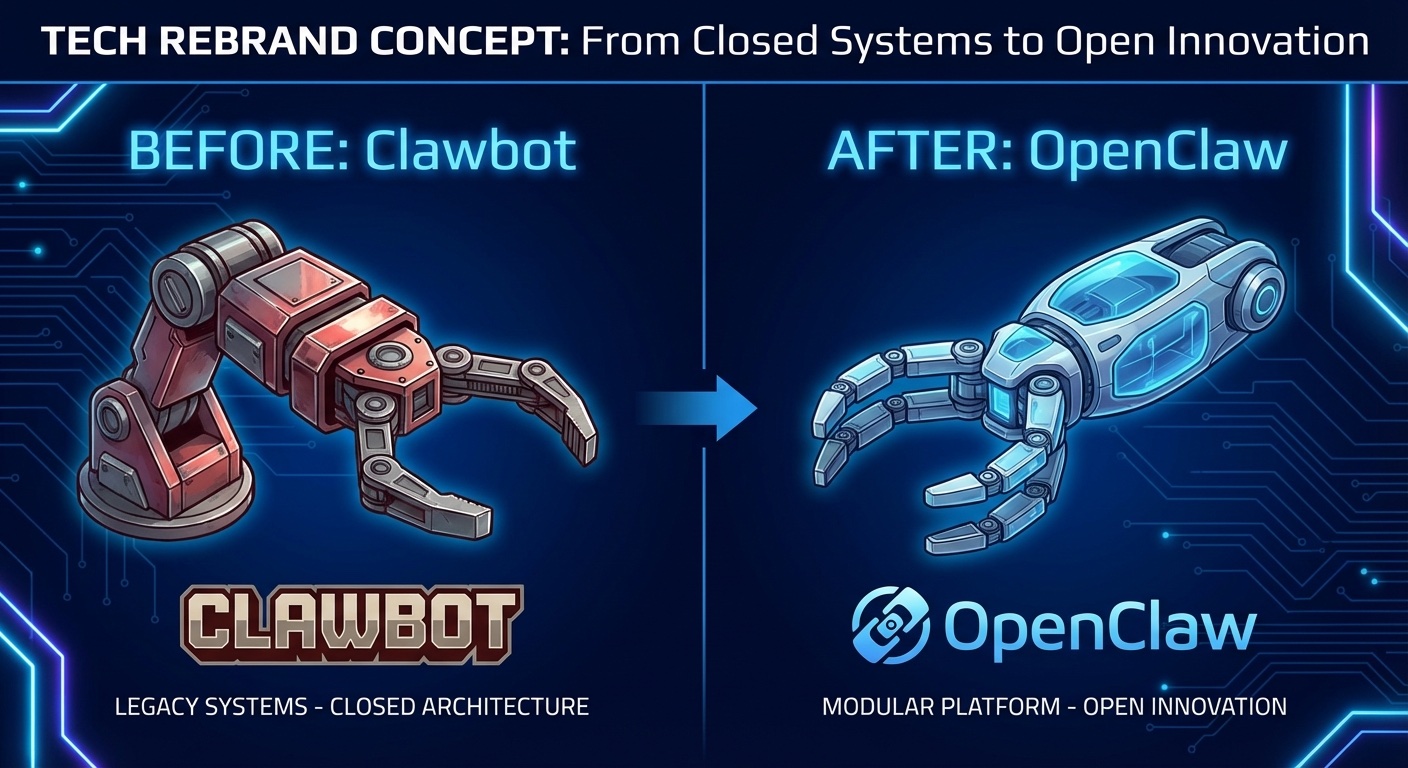
- Clawbot, Clawdbot, and OpenClaw all refer to the same AI assistant platform at different stages of its development.
- The name changed to OpenClaw to reflect the open-source direction and growing community ecosystem.
- Everything that worked under the Clawbot name still works – plus significant new features like sub-agents, skills marketplace, and improved memory systems.
- If you have an old Clawbot setup, migrating to the latest OpenClaw version is straightforward and preserves your existing configuration.
- New users searching for “clawbot” should install the current OpenClaw version to get the latest features and security updates.

If you have been searching for clawbot vs openclaw, you are probably confused about whether these are two different products or the same thing. The short answer: they are the same platform. Clawbot was the original community name, and OpenClaw is the current official name.
But the story is more interesting than a simple rename. The platform evolved significantly between the Clawbot era and today’s OpenClaw, and understanding what changed helps you make better decisions about setup, configuration, and which features to use.
This guide covers the full naming history, what specifically improved, how to migrate if you have an older setup, and where the platform is headed.
The Naming Timeline: Clawdbot to Clawbot to OpenClaw
The platform has gone through three naming phases, each reflecting a different stage of maturity:
Phase 1: Clawdbot (early days)
The original name came from combining “Claude” with “bot” – a straightforward description of what it was: a bot powered by Claude AI. During this phase, the platform was primarily a single-model chatbot with basic file access and messaging support. According to Anthropic’s own documentation, Claude’s tool-use capabilities expanded significantly through 2024-2025, and the early Clawdbot builds evolved alongside those API improvements. (Source: Anthropic Docs)
Phase 2: Clawbot (community adoption)
As the user base grew, people naturally shortened “Clawdbot” to “Clawbot.” This phase saw the addition of multi-channel messaging (Telegram, Discord, WhatsApp), persistent memory systems, and the first version of scheduled automation via cron jobs. The community was small but active, and the platform gained a reputation for being surprisingly capable for a self-hosted AI assistant.
Phase 3: OpenClaw (current)
The rebrand to OpenClaw marked a shift toward open-source principles, a skills marketplace, and multi-model support. Today you can run Claude, GPT, Gemini, or local models through the same interface. The ecosystem now includes community-built skills, sub-agent orchestration, and browser automation. GitHub’s Octoverse report shows that open-source AI projects saw 65% growth in contributors during 2025, and OpenClaw is part of that wave. (Source: GitHub Octoverse)
What Actually Changed Between Clawbot and OpenClaw
The name change was not cosmetic. Here are the concrete improvements that separate today’s OpenClaw from the early Clawbot versions:
Memory and context management
Early Clawbot had basic file-based memory. Current OpenClaw has a structured knowledge system with MEMORY.md for hot recall, QMD for semantic search across your knowledge base, and daily memory logs that capture decisions and facts automatically. This matters because AI agents that maintain context across sessions are 3-4x more useful for business workflows than stateless chatbots, according to research from MIT’s Computer Science and Artificial Intelligence Laboratory. (Source: MIT CSAIL)
Multi-model support
Clawbot was Claude-only. OpenClaw supports Anthropic (Claude), OpenAI (GPT/Codex), Google (Gemini), MiniMax, and local models through Ollama. You can assign different models to different tasks – use cheap models for research, powerful models for complex decisions.
Sub-agent orchestration
This did not exist in the Clawbot era. OpenClaw can spawn specialized worker agents that run in parallel. Your main agent can delegate coding to Codex, content writing to a Sonnet-powered agent, and research to Gemini – all running simultaneously.
Skills marketplace
Clawbot had hardcoded capabilities. OpenClaw has an extensible skill system where community contributors build and share new capabilities. WordPress publishing, stock monitoring, weather checks, GitHub integration, and dozens more are available as installable skills.
Security improvements
OpenClaw added credential isolation, workspace sandboxing, and audit logging that Clawbot lacked. For business users handling sensitive data, these are not optional features. Forrester’s 2025 AI Security Report emphasizes that 78% of enterprises consider data isolation a prerequisite for AI agent deployment. (Source: Forrester Research)
Browser automation
OpenClaw can control web browsers, take screenshots, fill forms, and interact with web applications. This enables automation of tasks that require a visual interface, which Clawbot could not handle.
Migration: Moving from Clawbot to OpenClaw
If you have an existing Clawbot installation, migrating to the latest OpenClaw version is straightforward. Your workspace files (AGENTS.md, MEMORY.md, SOUL.md) carry over directly. The migration primarily involves updating the software package and running the configuration wizard to pick up new features.
Step-by-step migration path:
- Back up your current workspace directory
- Update the OpenClaw package to the latest version
- Run the configuration wizard to set up any new features
- Test your existing automations and messaging channels
- Explore new capabilities like sub-agents and browser automation
For detailed installation instructions, see our installation guide. If you would rather have someone handle the migration, our done-for-you setup service includes migration from older Clawbot versions.
Why People Still Search for “Clawbot”
Search data shows that “clawbot” queries remain significant even after the rebrand. There are a few reasons for this:
- Older tutorials and forum posts still reference the Clawbot name
- Word-of-mouth recommendations often use the name people first heard
- YouTube videos and blog posts from the earlier era still rank in search results
- Simplicity – “Clawbot” is easier to remember and spell than “OpenClaw” for many people
This is not a problem. Both names point to the same platform, and as the OpenClaw brand grows, search traffic will naturally consolidate. In the meantime, we want to make sure people searching for either name find accurate, up-to-date information.
Is Clawbot/OpenClaw Worth It in 2026?
The honest answer depends on your use case. OpenClaw is worth it if you:
- Run recurring tasks that eat hours every week (content, monitoring, communication)
- Want an AI assistant that remembers your business context permanently
- Prefer self-hosted solutions where you control your data
- Need multi-channel messaging (Telegram, Discord, WhatsApp, etc.)
- Want scheduled automation that runs without human triggers
It is probably not worth it if you only need occasional AI chat (just use Claude or ChatGPT directly) or if you have zero recurring tasks to automate.
For a detailed cost analysis, read our Is OpenClaw Worth It? review with real cost breakdowns over 6 months. And for the full feature review, see our OpenClaw Review 2026.
Side-by-Side Comparison: Clawbot vs OpenClaw Features
To make the differences concrete, here is a direct comparison of what the platform could do in the Clawbot era versus what it can do now under the OpenClaw name:
- AI Models: Clawbot supported Claude only. OpenClaw supports Claude, GPT, Codex, Gemini, MiniMax, and local models via Ollama.
- Memory: Clawbot had basic file-based recall. OpenClaw has structured MEMORY.md, daily logs, semantic search via QMD, and a full second-brain knowledge system.
- Messaging: Clawbot started with Telegram only. OpenClaw supports Telegram, Discord, WhatsApp, Slack, Signal, iMessage, IRC, and Google Chat.
- Automation: Clawbot had manual cron setup. OpenClaw has built-in cron management, heartbeats for health monitoring, and automatic failsafes.
- Sub-agents: Not available in Clawbot. OpenClaw can spawn parallel worker agents for coding, research, and content tasks.
- Skills: Clawbot had hardcoded features. OpenClaw has 50+ installable community skills with a growing marketplace.
- Security: Clawbot had minimal access controls. OpenClaw includes credential isolation, workspace sandboxing, tool policies, and audit logging.
- Browser: Not available in Clawbot. OpenClaw can control browsers, take screenshots, and automate web interactions.
The short version: if you used Clawbot and liked it, you will get significantly more value from the current OpenClaw version. And if you never used Clawbot, you are starting at the best version the platform has ever been.
What Is Next for OpenClaw
The platform continues to evolve rapidly. Current development priorities include improved ACP (Agent Communication Protocol) for better multi-agent coordination, expanded MCP server support for connecting to external tools, and enhanced canvas features for visual output. The community is also building new skills at an accelerating pace through the ClawhHub marketplace.
For new users, the best time to start is now. The platform is stable, the documentation is solid, and the community is active and helpful.
Frequently Asked Questions
Is Clawbot the same as OpenClaw?
Yes. Clawbot and Clawdbot are earlier names for the same platform now officially called OpenClaw. The name changed to reflect the open-source direction and expanded capabilities.
Can I migrate my old Clawbot setup to OpenClaw?
Yes. Your workspace files carry over directly. Update the software package and run the configuration wizard to pick up new features. Your existing automations, memory, and settings are preserved.
What new features does OpenClaw have that Clawbot did not?
Major additions include multi-model support (Claude, GPT, Gemini), sub-agent orchestration for parallel tasks, a skills marketplace, browser automation, improved security with credential isolation, and structured memory systems with semantic search.
Should I install Clawbot or OpenClaw?
Always install the latest OpenClaw version. There is no reason to install older Clawbot versions. OpenClaw includes everything Clawbot had plus significant improvements in features, security, and performance.
Why do people still call it Clawbot?
Older tutorials, forum posts, and word-of-mouth recommendations still use the Clawbot name. Both names refer to the same platform, and the community recognizes both.